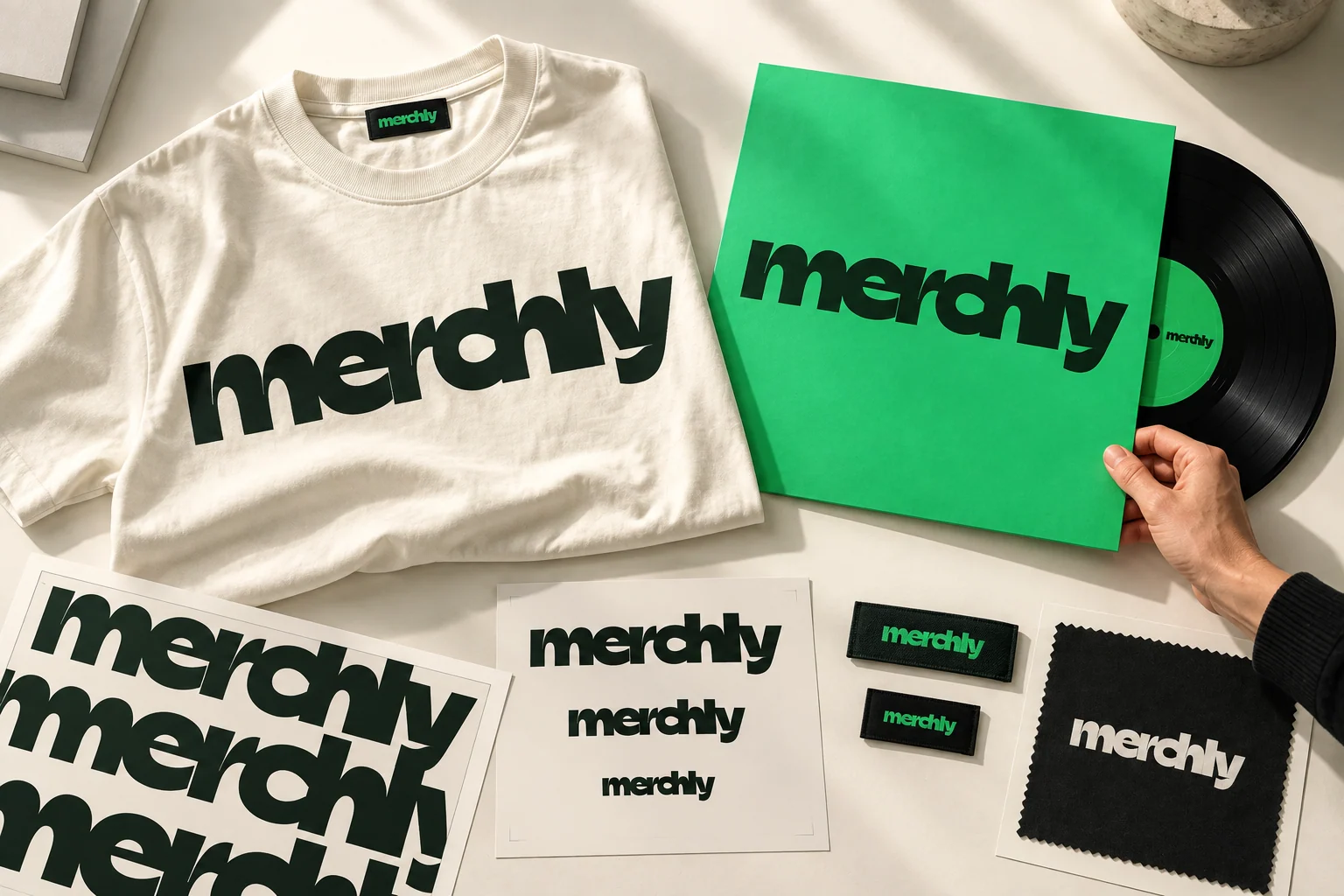
Start with one creative direction
Gather the album identity, artwork, photography, colours and references that belong to the artist. Decide what the collection should express: a release, a tour, a visual era or a more lasting signature.
A clear direction makes product decisions easier. Each piece can play a different role while still belonging to the same world.
Build a focused range
Choose the essentials around the audience and sales channels. Clothing, accessories, CDs, vinyl and collectibles have different uses and production requirements. Avoid adding references without a clear reason.
A limited edition can sit alongside a core product. Plan its quantity, numbering if any, packaging and launch story separately.
Connect the design to the material
Artwork changes when it becomes thread, ink, a woven label or a printed sleeve. Consider the scale, texture, fit and finishing from the start. The Studio reviews the technique against the product and design.
Ask for the artwork proof and clarify any sampling needed. Audio, sleeve and clothing approvals are separate when a release includes physical music.
Plan the launch backwards
Map the release date, stock arrival, photography, any pre-orders and sales dates. Include design approval, manufacturing, assembly and transport. Confirm responsibilities for the online store, fulfilment and live sales rather than assuming they are included.
Quantities should reflect the audience, channels and available sales history. Track results by product and size to inform the next collection.
Questions, answered.
Do all products need the same design?
No. A shared visual direction can connect different designs, materials and branding treatments.
Can a record and clothing launch together?
Yes, but their manufacturing processes have different requirements. Plan the schedules and final assembly together.