There is no single best technique. The right choice comes from the artwork, the material, the number of pieces and the finish you want.
By the Merchly Studio team · Updated 20 September 2026 · 3 min read
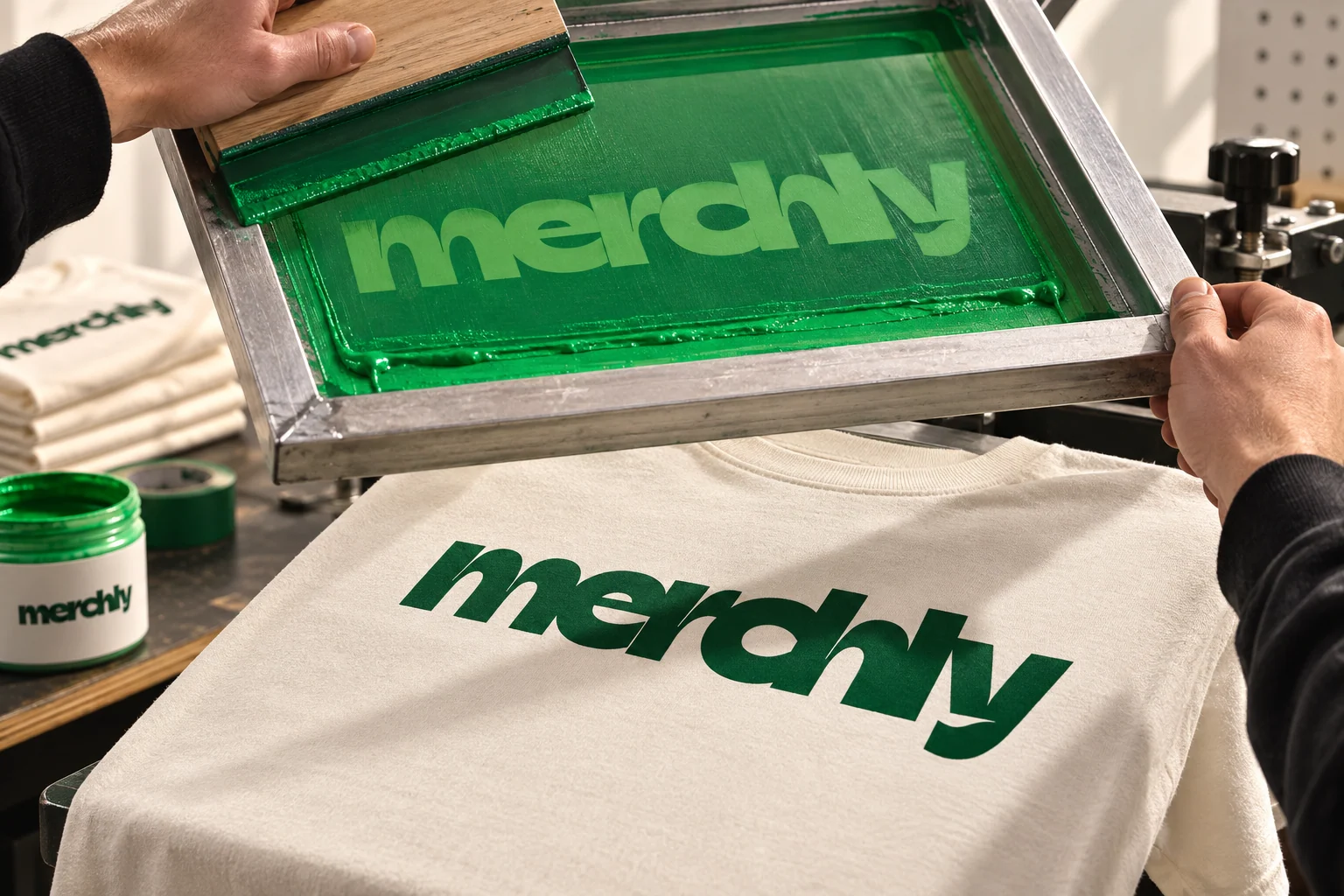
Screen printing a green Merchly logo on an ivory t-shirt, with a squeegee, screen and fresh ink.
Screen printing: build the image colour by colour
Screen printing suits graphic designs with a defined colour palette. Preparation and the number of colours influence the quote, so quantity matters. Fine details, gradients and the chosen fabric need to be assessed before approving the design.
Specify the desired result rather than choosing only from a technique name. Ink, fabric and production settings all affect the feel and appearance.
Embroidery: texture and depth
Embroidery builds the design with thread. It can give a logo or motif a tactile presence, but very small lettering and fine details may need adapting. Stitch area, density and garment structure are important to the result.
Review scale and position on the actual product. A design that works on a jacket may need changes for a cap or a lightweight t-shirt.
Digital print and transfers
Direct-to-garment printing and transfer processes can be useful for detailed or multicoloured artwork. They are different methods, so ask which process is proposed and how it suits the material.
Colour, fabric composition, surface texture and the intended care routine affect suitability. The Studio confirms the method after reviewing the product and artwork.
Special finishes and objects
Puff, flock, patches and woven labels create different textures and levels of detail. Engraving marks compatible materials without adding a printed colour. These choices should serve the design and intended use, with feasibility checked on the selected reference.
Share the artwork at the intended size.
Identify the product and material.
Specify positions and quantity.
Explain the desired look and feel.
Ask about care, proofs and samples where relevant.
Approve the result, not just the name
The quote and artwork proof should specify the technique, dimensions, position and colours. If a sample is needed to judge texture or colour, agree it before scheduling production. Read ourt-shirt guideto connect product selection with branding.