CD replication or duplication: choosing the process
Replication and duplication both deliver a physical disc, but they are different production methods. The right choice depends on the release and specification.
By the Merchly Studio team · Updated 20 September 2026 · 3 min read
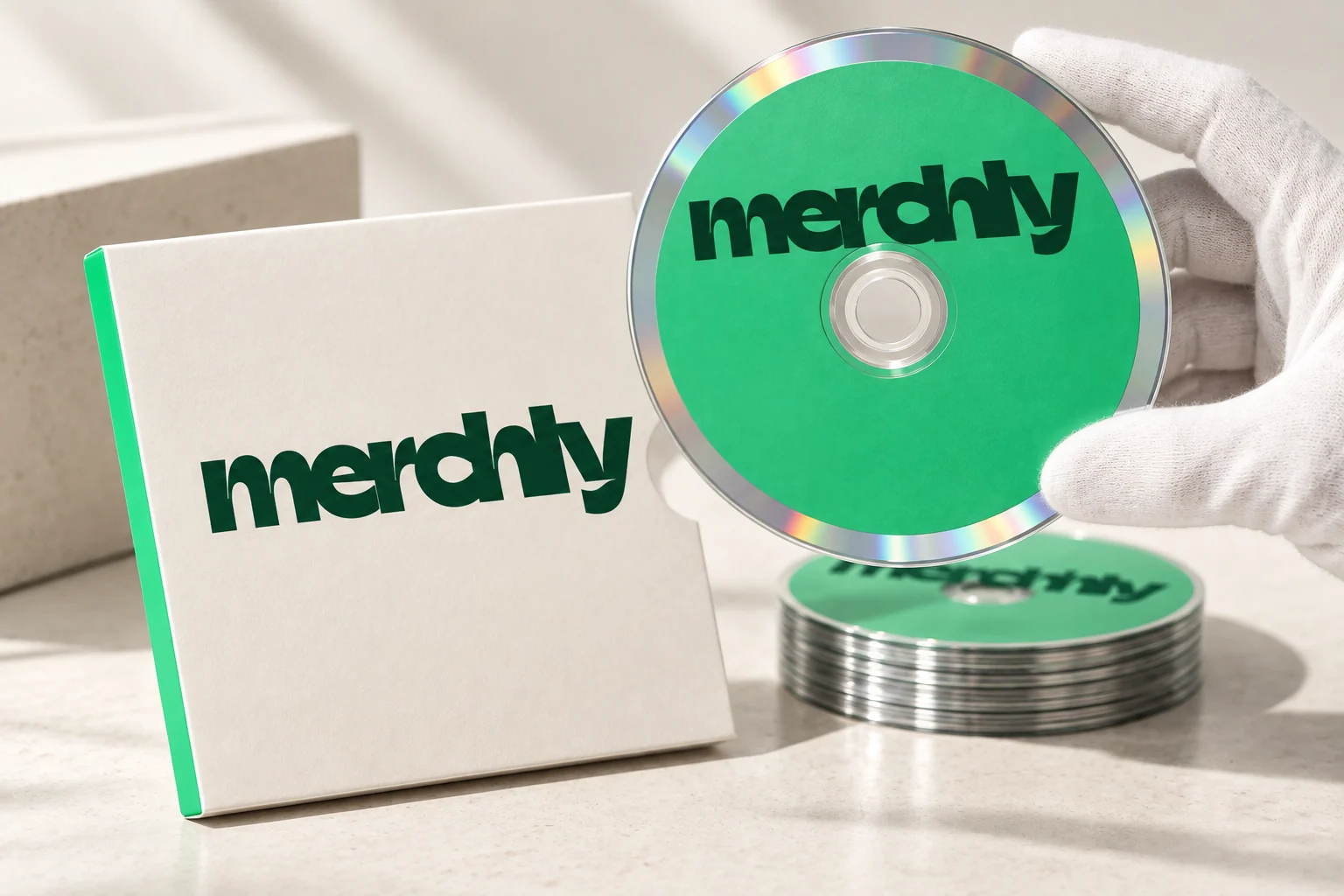
Inspecting a green and silver Merchly CD above its printed sleeve.
Understand the distinction
Replication manufactures discs using an industrial production process from an approved master. Duplication records the programme onto recordable discs. Ask which method is being proposed rather than relying on the word “pressing” alone.
The process affects production requirements and economics. Quantity, intended use and timing should guide the discussion.
Describe the release
Explain whether the CD is for a commercial release, promotional use, tour sales or a collector’s edition. Give the quantity and desired stock arrival date. The production team can assess the suitable method and current conditions.
Do not assume every small run or urgent request has the same solution. Confirm the proposed disc, printing and quality checks in the quote.
Prepare the audio correctly
Request the audio specifications for the selected process. Confirm the final programme, track order and any metadata with your engineer and release team. Keep reference listening files distinct from the manufacturing master.
Assign one final audio approver and avoid sending several ambiguously named versions.
Compare complete editions
Packaging can have a significant role in the quote. Specify a digipack, digisleeve or jewel case, with booklet, panels and print finishes. Ask whether assembly and shipping are included.
OurCD packaging guidehelps clarify these choices. Review artwork separately from the audio master.
Confirm the calendar and approvals
Include file checks, corrections, print approval, production and transport. The quote should state the chosen process and any minimum quantity. Merchly can help plan theCD editionalongside your wider merchandise.